

How to Incorporate Rainwater Harvesting in Your ADU Design
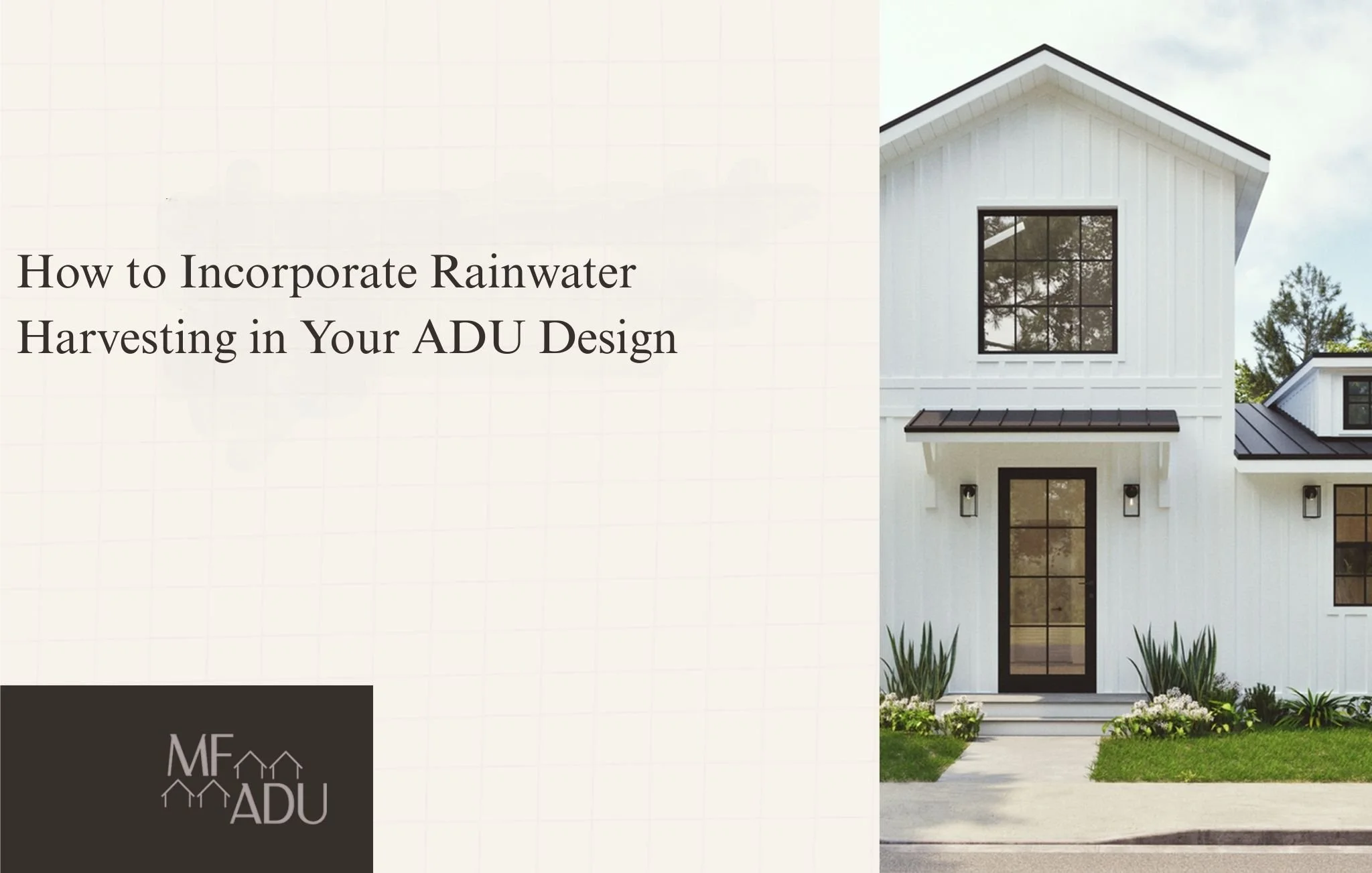
As water conservation becomes increasingly important in California, many homeowners are looking for ways to make their accessory dwelling units (ADUs) more sustainable. Rainwater harvesting is one practical solution that reduces reliance on municipal water, supports eco-friendly living, and helps manage runoff more efficiently. At MF ADU, we help homeowners plan ADU designs that can support smart water-saving systems without compromising comfort or aesthetics.
What Is Rainwater Harvesting?
Rainwater harvesting involves collecting rainwater from roofs and other surfaces, storing it, and reusing it for approved purposes such as landscape irrigation or non-potable household uses. When incorporated during the design phase, these systems can be seamlessly integrated into an ADU.
For ADUs, rainwater harvesting is most effective when paired with thoughtful roof design, drainage planning, and storage placement.
Designing Your ADU for Rainwater Collection
The design of your ADU plays a major role in how effective a rainwater harvesting system can be.
Key design considerations include:
Roof slope and surface material to guide water efficiently
Gutter and downspout placement
Space for storage tanks or cisterns
Drainage paths that prevent overflow issues
Planning these elements early makes the system more efficient and visually unobtrusive.
Storage and System Components
Rainwater harvesting systems typically include gutters, filters, storage tanks, and distribution components. Storage tanks can be above-ground or underground, depending on space and design preferences.
Proper filtration ensures collected water is suitable for its intended use, while overflow systems help manage excess water during heavy rainfall.
Approved Uses for Harvested Rainwater
In California, harvested rainwater is commonly used for:
Landscape irrigation
Drip systems and garden watering
Groundwater recharge
Certain non-potable household uses, depending on local regulations
Understanding local guidelines helps ensure your system is compliant and functional.
Benefits of Rainwater Harvesting for ADUs
Incorporating rainwater harvesting offers several advantages:
Reduced water bills
Lower demand on local water systems
Support for sustainable living goals
Better stormwater management
For ADU owners, this means long-term savings and a more environmentally responsible property.
Did you know?
Did you know rainwater harvesting systems in California often do not require complex permitting when used for landscape irrigation, making them one of the simplest sustainability features to add to an ADU design?
Plan a Water-Efficient ADU with MF ADU
Rainwater harvesting is a forward-thinking addition that aligns perfectly with sustainable ADU design. At MF ADU, we help homeowners consider water efficiency early in the planning process so systems like rainwater harvesting can be integrated smoothly and effectively.
To see how sustainability features are incorporated into real projects, explore our work in the project gallery.
Frequently Asked Questions
Can rainwater harvesting be added to any ADU?
Most ADUs can support rainwater harvesting with proper roof and drainage design.
Is rainwater harvesting expensive to install?
Costs vary, but systems are generally affordable and can reduce long-term water expenses.
Can harvested rainwater be used inside the ADU?
In some cases, yes, for non-potable uses, depending on local regulations.
Does rainwater harvesting require a lot of maintenance?
Maintenance is minimal and usually involves periodic filter cleaning and tank inspection.
Does MF ADU help plan sustainable water features?
Yes. We help homeowners evaluate and incorporate water-efficient solutions during the design phase.