

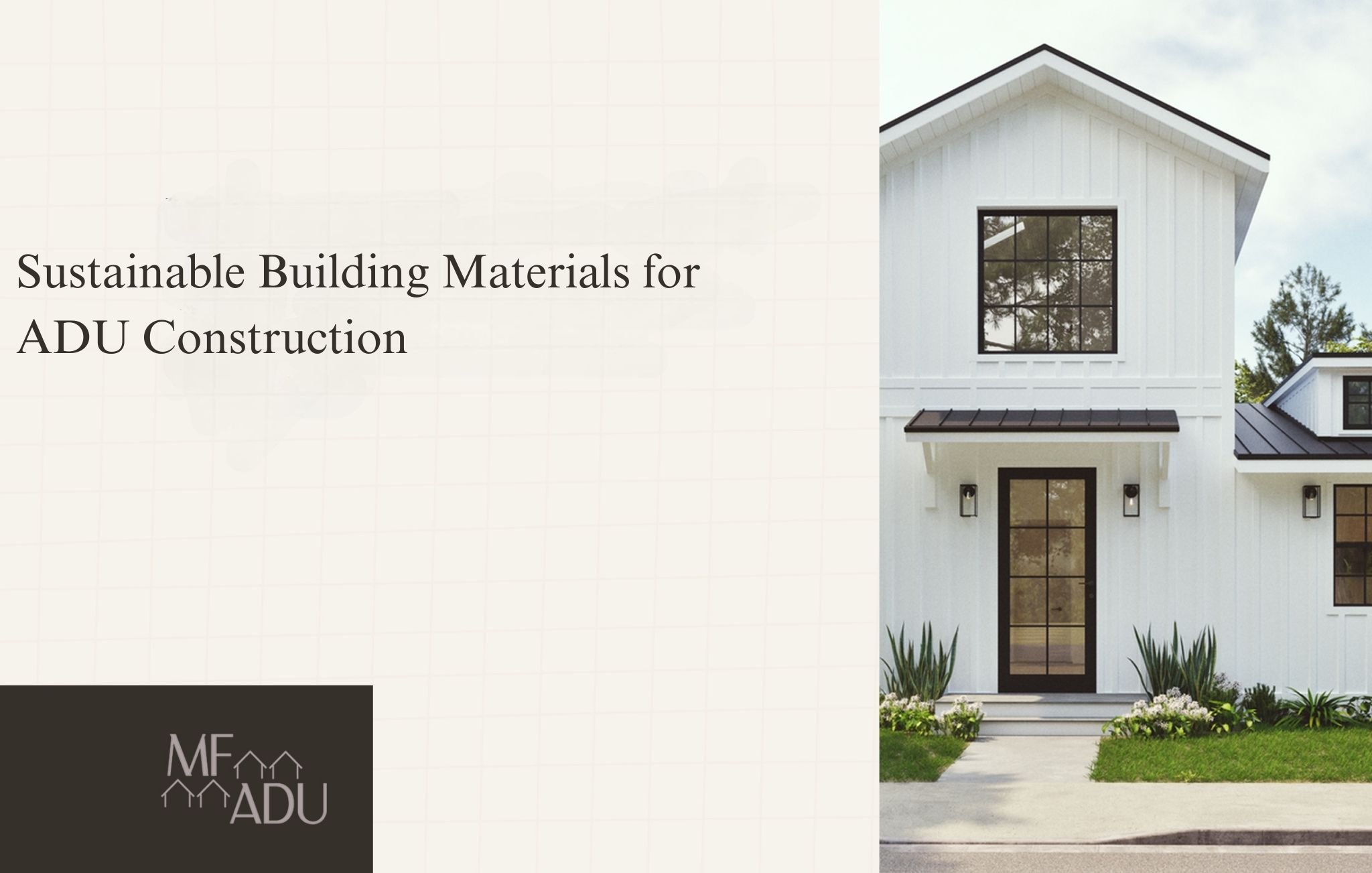
Building an accessory dwelling unit is already a smart use of space, but selecting sustainable materials makes the project even more impactful. Sustainable construction focuses on reducing waste, improving energy efficiency, and using materials that perform well over time. At MF ADU, we help homeowners make material choices that align with environmental goals while still delivering comfort, durability, and long-term value.
Why Sustainable Materials Matter for ADUs
Sustainable building materials reduce the environmental footprint of construction while supporting healthier living spaces. These materials often last longer, require less maintenance, and improve overall efficiency, making them ideal for ADU construction.
For homeowners, this means lower operating costs and a more future-ready property.
Recycled and Reclaimed Materials
Using recycled or reclaimed materials helps reduce demand for new raw resources and keeps usable materials out of landfills.
Common options include:
Reclaimed wood for flooring or accent walls
Recycled steel for framing and structural elements
Recycled concrete for foundations or hardscaping
These materials provide strength and character while supporting responsible construction practices.
Engineered Wood and Renewable Resources
Engineered wood products are designed for strength, stability, and efficiency. Many are made from fast-growing or renewable resources, making them more sustainable than traditional lumber.
Examples include:
Engineered timber for framing
Bamboo flooring for durability and renewability
Cork materials for insulation and interior finishes
These options help balance performance with sustainability.
Low-Impact Insulation and Finishes
Insulation and finishes play a major role in energy efficiency and indoor air quality. Sustainable choices can improve comfort while reducing energy use.
Consider materials such as:
Recycled or cellulose insulation
Low-VOC paints and finishes
Natural fiber insulation options
These materials help create healthier indoor environments and reduce long-term energy demands.
Energy-Efficient Windows and Exterior Materials
Sustainable ADU construction also includes exterior components. High-performance windows and durable exterior finishes help reduce heat loss and improve overall efficiency.
Energy-efficient windows, weather-resistant siding, and long-lasting roofing materials contribute to both sustainability and long-term performance.
Did you know?
Many sustainable building materials also qualify for energy-efficiency incentives or rebates, helping homeowners offset upfront costs while saving money over time.
Build Sustainably with MF ADU
Sustainable materials are an investment in long-term performance, comfort, and environmental responsibility. At MF ADU, we help homeowners choose materials that align with sustainable goals while meeting design, durability, and budget expectations.
To see how sustainable materials are used in real projects, explore our completed ADUs in the project gallery.
Frequently Asked Questions
What makes a building material sustainable?
Sustainable materials are durable, energy-efficient, responsibly sourced, and designed to reduce environmental impact.
Are sustainable materials more expensive?
Some may cost more upfront, but they often reduce maintenance and operating costs over time.
Can sustainable materials be used in prefab ADUs?
Yes. Prefabricated ADUs commonly use engineered and efficient materials that support sustainability goals.
Do sustainable materials affect indoor air quality?
Yes. Low-VOC and natural materials can significantly improve indoor air quality.
Does MF ADU help select sustainable materials?
Yes. We guide homeowners through material selection to balance sustainability, performance, and budget.