

ADU Design Ideas for Reducing Carbon Footprint
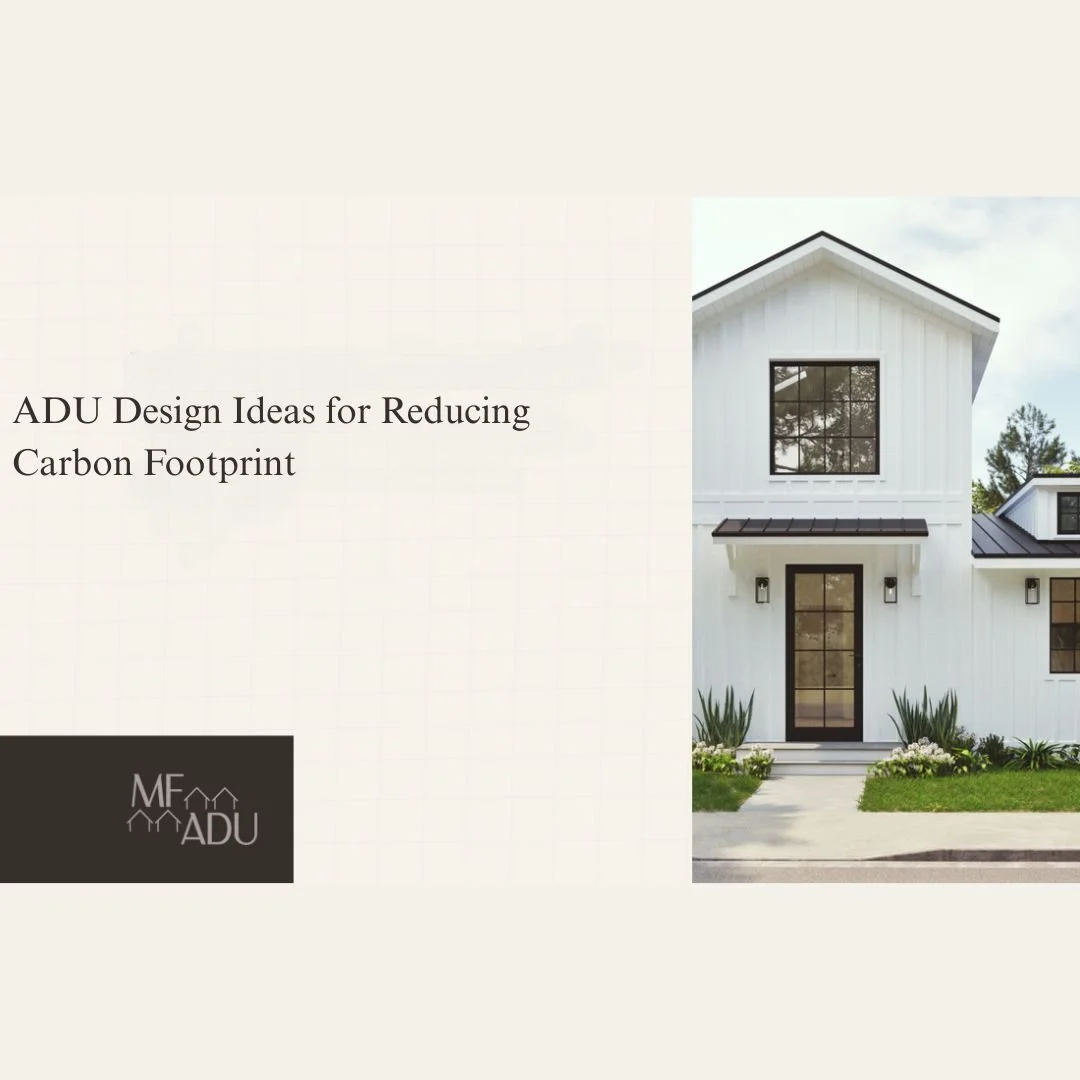
Reducing carbon footprint starts with thoughtful design. When planning an accessory dwelling unit (ADU), every decision—from layout to materials—can contribute to a more sustainable outcome. At MF ADU, we focus on design strategies that minimize energy use, reduce waste, and support long-term environmental responsibility without sacrificing livability.
Prioritize Compact and Efficient Layouts
Smaller, well-planned layouts naturally use fewer materials and require less energy to heat and cool. Efficient floor plans reduce wasted space and encourage multifunctional areas.
Designing with intention allows an ADU to feel open and comfortable while maintaining a lower environmental impact.
Maximize Natural Light and Ventilation
Using daylight and airflow effectively reduces reliance on artificial lighting and mechanical cooling.
Design strategies include:
Large, well-placed windows
Cross-ventilation through opposing openings
Open layouts that allow air to circulate freely
These features help maintain indoor comfort with less energy use.
Choose Low-Impact Building Materials
Material selection plays a major role in carbon reduction. Using responsibly sourced and durable materials helps lower emissions associated with manufacturing and transportation.
Common low-impact choices include engineered wood, recycled materials, and finishes with reduced environmental impact.
Design for Energy Efficiency
Energy-efficient ADUs reduce ongoing carbon emissions throughout their lifespan. Insulation, window performance, and system efficiency all contribute to lower energy demand.
Designing for energy efficiency from the beginning avoids costly upgrades later and supports long-term sustainability goals.
Plan for Renewable Energy Integration
Designing an ADU to accommodate renewable energy systems, such as solar panels, allows for cleaner energy use over time. Even if systems are installed later, solar-ready design supports future carbon reduction.
Proper roof orientation and electrical planning make renewable integration easier and more effective.
Reduce Construction and Long-Term Waste
Prefabricated construction methods reduce waste by optimizing material use in controlled environments. Durable design also lowers long-term waste by reducing the need for frequent repairs or replacements.
A longer-lasting ADU is a more sustainable ADU.
Did you know?
Did you know buildings account for a significant portion of carbon emissions, and even small design improvements in an ADU can meaningfully reduce environmental impact over the life of the structure?
Build a Lower-Impact ADU with MF ADU
Reducing carbon footprint doesn’t require sacrificing comfort or quality. At MF ADU, we help homeowners design ADUs that are efficient, durable, and environmentally responsible from day one.
Frequently Asked Questions
How does ADU design affect carbon footprint?
Design influences energy use, material consumption, and long-term efficiency, all of which impact emissions.
Are smaller ADUs more sustainable?
Yes. Compact layouts typically use fewer resources and require less energy to operate.
Can prefab ADUs help reduce carbon footprint?
Yes. Prefabrication reduces material waste and improves construction efficiency.
Does natural ventilation really make a difference?
Yes. Proper ventilation reduces reliance on mechanical cooling and lowers energy use.
Does MF ADU help design environmentally responsible ADUs?
Yes. We guide homeowners through design choices that support sustainability and long-term efficiency.