

Navigating ADU Regulations for Multi-Family Properties
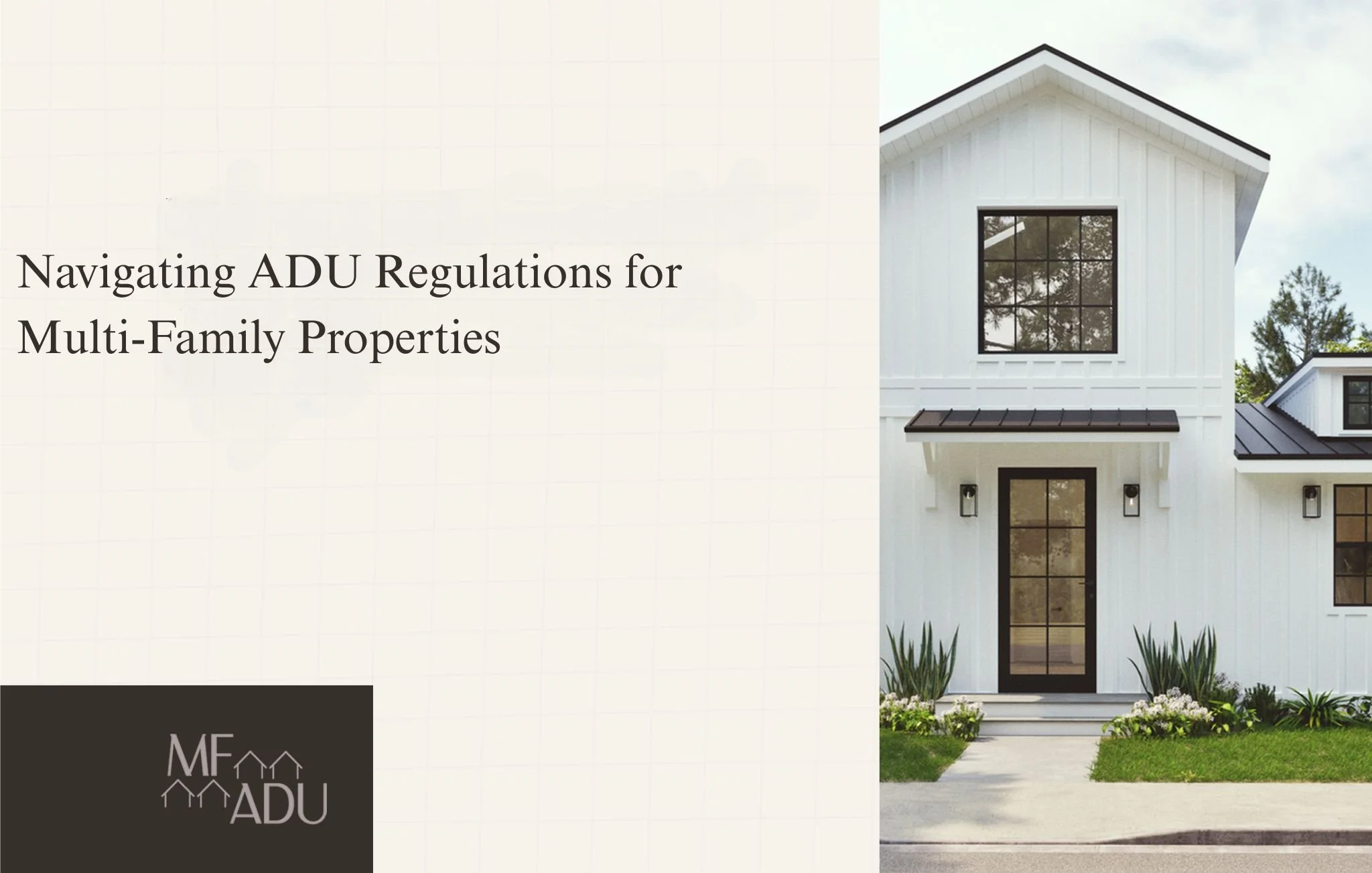
Accessory dwelling units (ADUs) are increasingly being added to multi-family properties across California as a way to increase housing supply and property value. While the process is slightly different than for single-family homes, state law supports ADU development on multi-family lots as well. At MF ADU, we help property owners understand the rules and design ADUs that meet local regulations without unnecessary complications.
How ADUs Work on Multi-Family Properties
California law allows ADUs on many multi-family properties, including apartment buildings and duplexes. In some cases, multiple ADUs may be permitted on the same lot, depending on the size and configuration of the property.
These ADUs may be created through:
Conversion of existing non-livable spaces such as storage rooms or garages
Detached new construction units placed on available land
Understanding which option applies to your property is the first step.
Zoning and Property Type Requirements
Zoning codes still apply to multi-family ADUs. The property must be in a zone that allows residential use, and local rules may define how many ADUs are permitted based on the number of existing units.
Some cities allow a certain percentage of existing units to be added as ADUs, while others set a fixed maximum.
Setbacks, Height, and Placement Rules
Setbacks, height limits, and lot coverage still apply when building ADUs on multi-family properties. However, many cities provide flexibility when ADUs are created within existing structures.
Detached ADUs on multi-family lots must still comply with placement and spacing rules, which is why early site evaluation is critical.
Parking and Access Considerations
Parking rules for multi-family ADUs are often more flexible than for traditional units, especially in transit-friendly areas. Some cities waive parking requirements entirely for ADUs.
Access for emergency services and tenant safety is also reviewed during permitting, particularly for properties with multiple units.
Permitting and Approval Process
The permitting process for multi-family ADUs is similar to single-family ADUs but may involve additional review depending on building type and occupancy.
Clear plans and accurate documentation help keep approvals on track and prevent delays.
Did you know?
Did you know? California law allows multiple ADUs on some multi-family properties, depending on existing unit count and available space.
Expand Your Property with MF ADU
Adding ADUs to a multi-family property is a powerful way to increase usable space and long-term value. At MF ADU, we help property owners evaluate their site, understand regulations, and design ADUs that fit seamlessly into existing developments.
If you’d like to discuss your multi-family property and explore your options, connect with us through our contact page.
Frequently Asked Questions
Can I build an ADU on a multi-family property?
Yes. Many multi-family properties in California are eligible for ADUs.
How many ADUs can be added to a multi-family lot?
It depends on local rules and the number of existing units.
Do zoning rules differ for multi-family ADUs?
The same zoning framework applies, but some cities have specific provisions for multi-family properties.
Are parking requirements different for multi-family ADUs?
Often yes. Many cities offer reduced or waived parking requirements.
Does MF ADU work with multi-family properties?
Yes. We help evaluate and plan ADUs for both single-family and multi-family properties.