

Understanding Setbacks, Height Limits, and Lot Coverage for ADUs
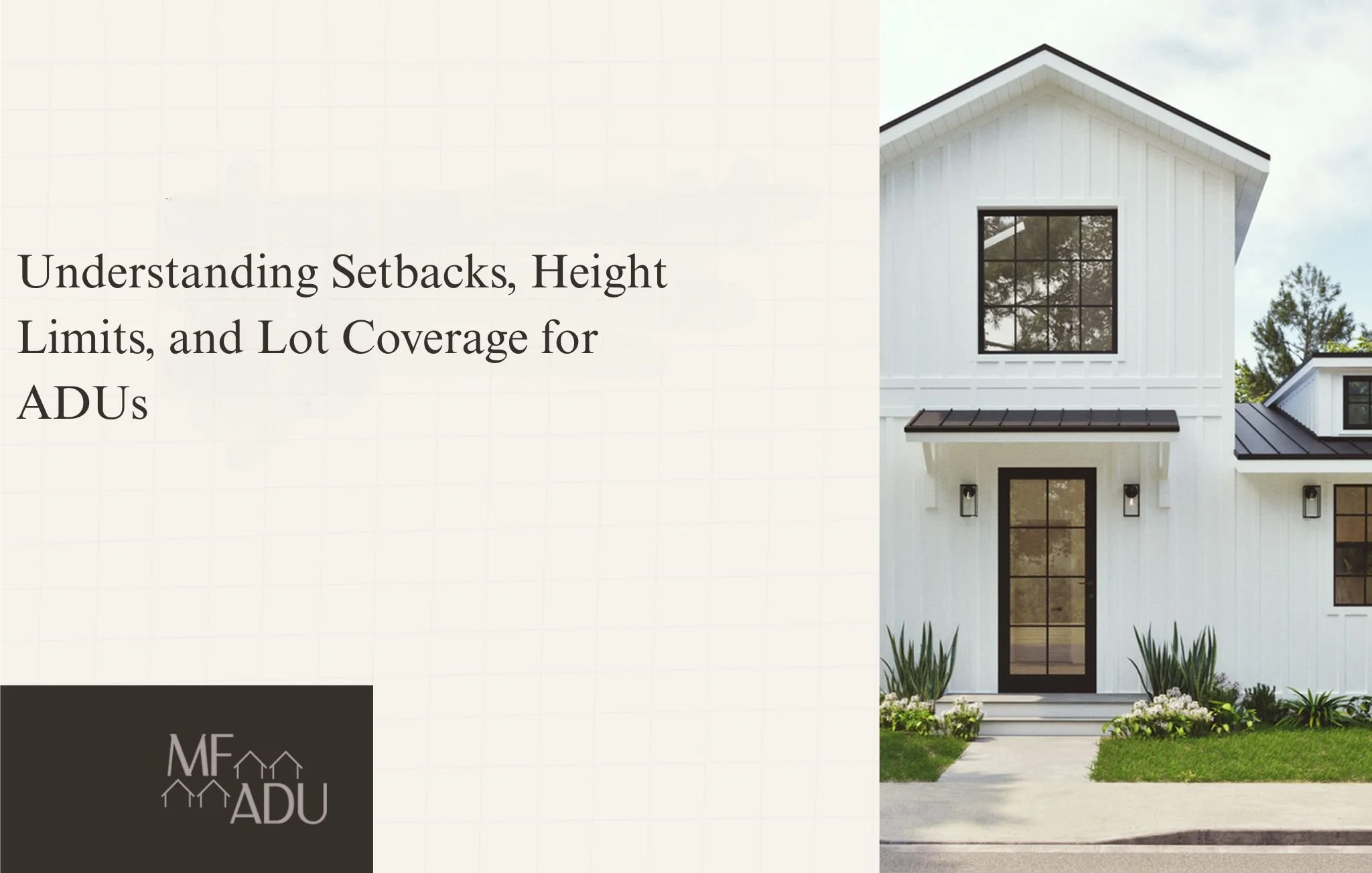
When planning an accessory dwelling unit (ADU), three zoning factors play a major role in what’s possible: setbacks, height limits, and lot coverage. These rules influence where your ADU can be placed, how tall it can be, and how much of your property can be built on. At MF ADU, we help homeowners understand these requirements early so designs stay compliant and projects move forward without surprises.
What Are Setbacks and Why Do They Matter?
Setbacks define how far a structure must be from property lines, fences, and existing buildings. These distances are set by local zoning codes and help maintain safety, access, and neighborhood spacing.
For ADUs, California law often allows reduced setbacks compared to main homes, making it easier to build in tighter spaces. However, exact distances still vary by city.
How Height Limits Affect ADU Design
Height limits control how tall your ADU can be. These limits are in place to preserve privacy, light access, and neighborhood character.
In many areas, ADUs are allowed to be taller than one story, especially when built as detached units. Height restrictions may also depend on whether the ADU is above a garage or attached to the main home.
Understanding height rules early prevents redesigns later in the process.
What Is Lot Coverage?
Lot coverage refers to the percentage of your property that can be covered by structures. This includes your main home, garage, and any additional buildings.
If your lot is already heavily developed, lot coverage limits may influence the size or placement of your ADU. The good news is that many cities offer flexibility for ADUs compared to traditional additions.
Why These Rules Work Together
Setbacks, height limits, and lot coverage are interconnected. A property may meet setback requirements but exceed lot coverage, or allow height but restrict placement.
That’s why reviewing all three together is essential. A design that works on paper may need adjustments to meet all zoning conditions at once.
How MF ADU Designs Around These Limits
At MF ADU, we evaluate your property’s layout, zoning code, and physical constraints before finalizing any design. This allows us to:
Maximize usable space
Stay within zoning limits
Avoid costly plan revisions
Keep approvals on track
Smart planning at this stage saves time and prevents frustration later.
Did you know?
Did you know? Many California cities allow ADUs to be built with zero side-yard setbacks when converted from existing structures like garages.
Plan Smarter with MF ADU
Understanding setbacks, height limits, and lot coverage is key to a smooth ADU project. At MF ADU, we help homeowners navigate these rules and design ADUs that fit both their property and local requirements.
If you’d like to see how different designs work within zoning limits, explore our ADU models.
Frequently Asked Questions
What is the minimum setback for an ADU in California?
Many cities allow reduced setbacks for ADUs, often as little as four feet, but this varies by location.
Can I build a two-story ADU?
In some cities, yes. Height limits determine whether a two-story ADU is allowed.
What happens if my lot coverage is already high?
Your ADU may need to be smaller or placed differently to stay within coverage limits.
Do setbacks apply to garage conversions?
Often no. Existing structures may be allowed to remain within current setbacks.
Does MF ADU review zoning limits before design?
Yes. We evaluate setbacks, height, and lot coverage before finalizing any layout.