

Understanding the True Cost of Building an ADU
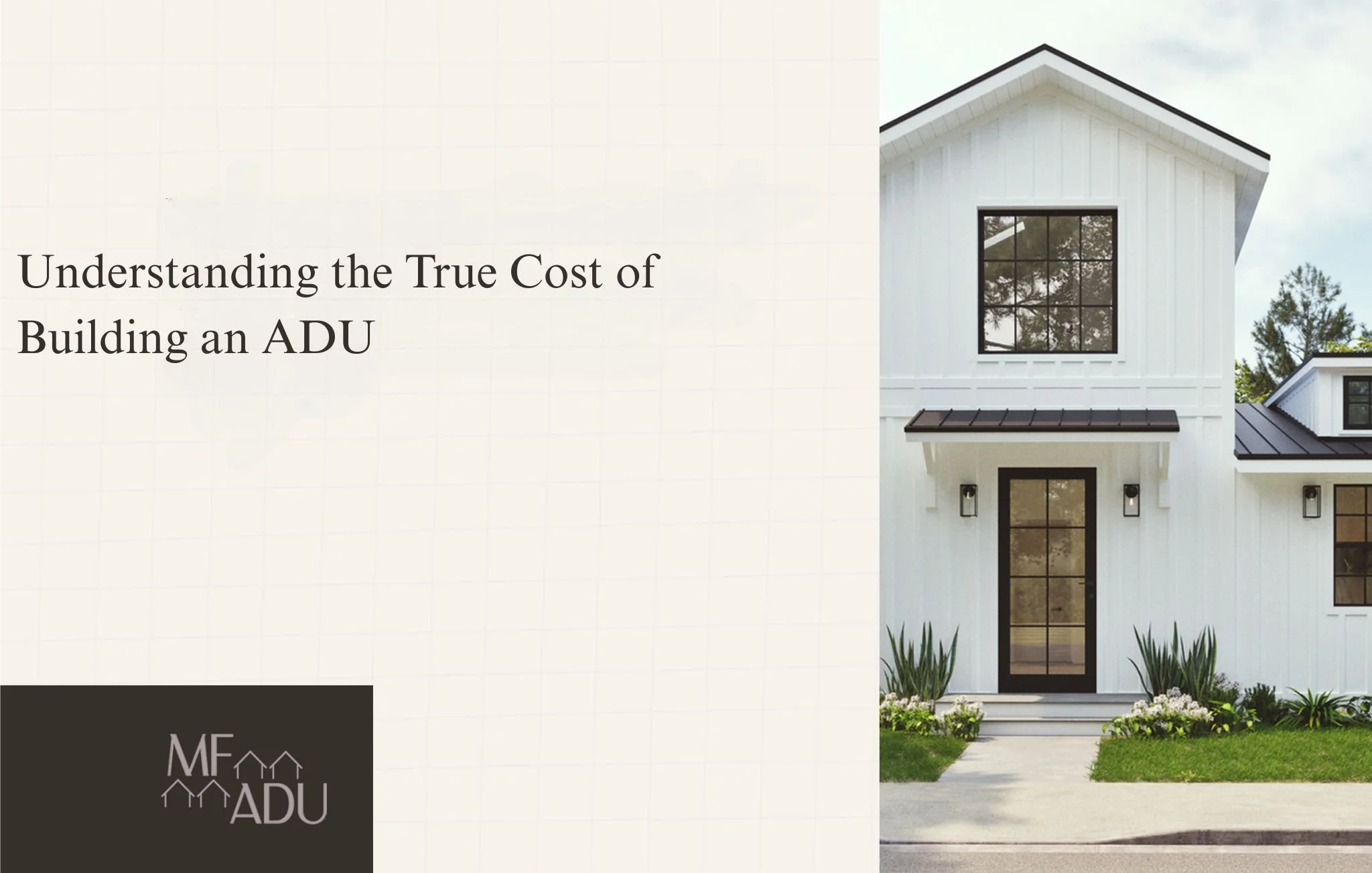
When homeowners think about building an accessory dwelling unit (ADU), they often focus only on the base construction price. In reality, the true cost includes planning, permits, site conditions, utilities, and long-term considerations. At MF ADU, we believe transparency is essential, so homeowners can plan realistically and avoid unexpected expenses along the way.
Upfront Planning and Design Costs
Before construction begins, there are essential upfront costs tied to planning and design. These typically include architectural layouts, engineering, and site evaluations.
Strong planning helps ensure the ADU fits your property, complies with local regulations, and avoids revisions later—saving money in the long run.
Permits, Fees, and Approvals
Every ADU requires city approvals and inspections. Permit and plan-check fees vary by municipality, but they are a necessary part of the process.
Incomplete or inaccurate submissions can increase costs due to resubmissions, which is why working with an experienced ADU team helps keep this portion predictable.
Construction Isn’t the Only Major Expense
While construction is often the largest cost, it’s not the only one that matters.
Construction costs typically include:
Structural components and labor
Installation and assembly
Roofing, insulation, and exterior finishes
Prefabricated ADUs help control these expenses by reducing on-site labor, material waste, and scheduling uncertainty.
Site Work and Utility Connections
Site-specific factors can significantly impact total cost. These may include foundation requirements, grading, trenching, and utility connections for water, sewer, gas, and electricity.
Properties with easier access to utilities usually experience lower overall costs, which is why early site evaluation is so important.
Interior Finishes and Long-Term Costs
Interior finishes such as cabinetry, flooring, appliances, and fixtures influence both upfront cost and long-term maintenance. Choosing durable, energy-efficient materials can reduce ongoing expenses and improve comfort.
The “true cost” of an ADU includes not just what you pay to build it—but how it performs over time.
Did you know?
Did you know? Many cost overruns in ADU projects come from underestimated site work and utility upgrades—not from the ADU structure itself.
Seeing the Full Picture with MF ADU
Understanding the true cost of building an ADU allows homeowners to make smarter decisions and protect their investment. At MF ADU, we help clients see the full picture—planning, construction, and long-term value—so there are no surprises.
To see real examples of completed projects and design options, explore our ADU project gallery.
Frequently Asked Questions
What is included in the “true cost” of an ADU?
Planning, permits, construction, site work, utilities, and interior finishes all contribute to total cost.
Why do ADU costs vary so much between properties?
Lot conditions, utility access, design choices, and city fees all affect pricing.
Are prefabricated ADUs more predictable in cost?
Yes. Prefab ADUs typically have fewer variables and more consistent pricing.
Can early planning reduce overall ADU costs?
Absolutely. Identifying site and utility needs early prevents costly changes later.
Does MF ADU help estimate total project costs upfront?
Yes. We guide homeowners through realistic budgeting based on their property and goals.