

How to Use Color to Enhance Your ADU’s Interior
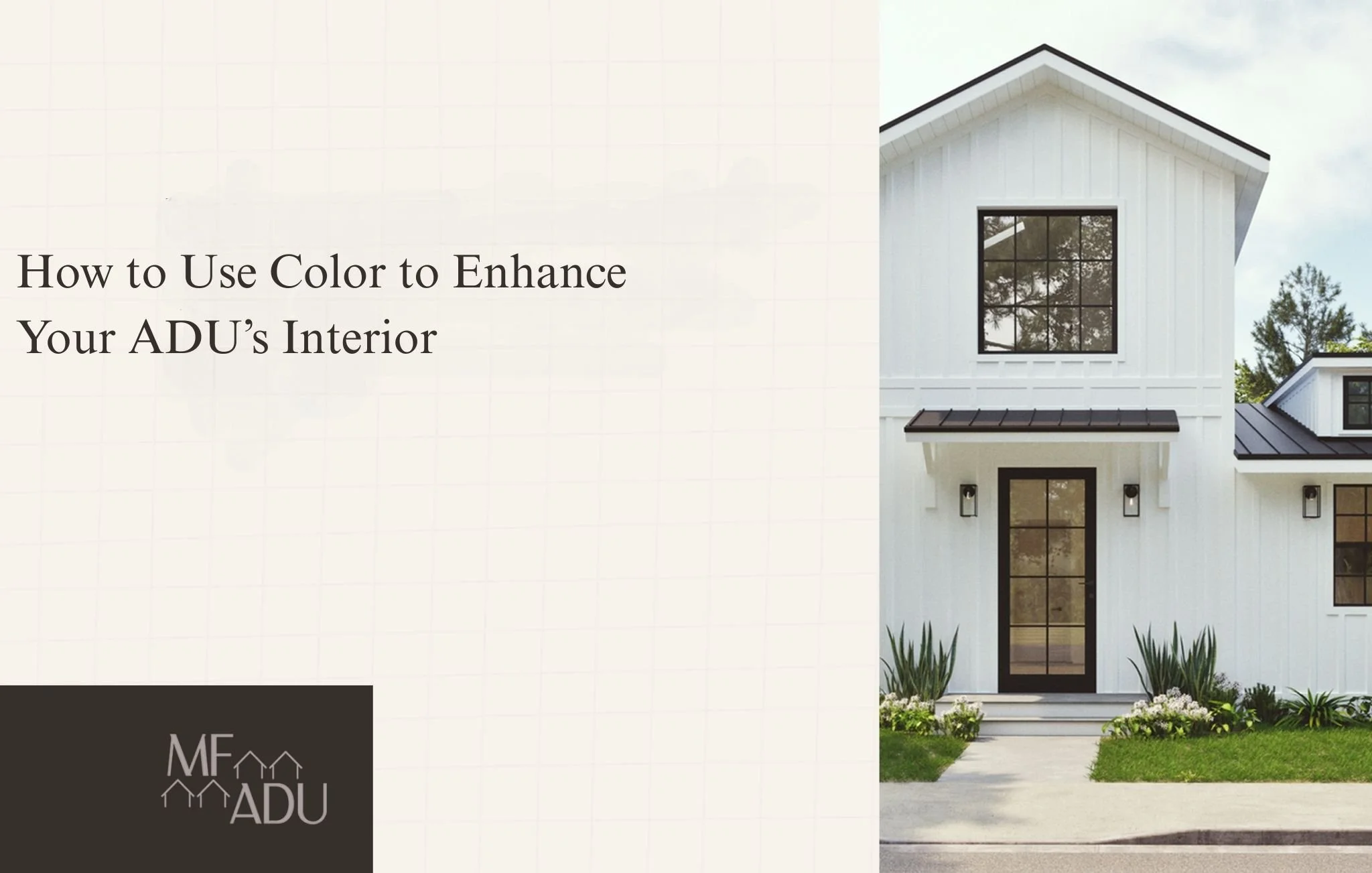
Color plays a powerful role in how we experience interior spaces. In an accessory dwelling unit, thoughtful color choices can make rooms feel larger, brighter, and more cohesive. Because ADUs often operate within a smaller footprint, the right palette can significantly influence comfort and visual balance.
At MF ADU, we focus on design strategies that help homeowners create interiors that feel open and inviting while maintaining a consistent style throughout the space.
Choose Light Base Colors for Openness
Light and neutral colors are one of the easiest ways to visually expand a compact interior. Shades such as soft whites, warm neutrals, and light grays reflect natural light and make rooms feel more spacious.
Using a light base color on walls and ceilings creates a clean foundation that allows other design elements to stand out without overwhelming the space.
Use Accent Colors Strategically
Accent colors add personality without making the space feel crowded. Rather than covering entire walls with bold colors, accents can be introduced through smaller elements.
Common ways to incorporate accent colors include:
Decorative pillows and textiles
Artwork or wall décor
Cabinet finishes or backsplash areas
Furniture pieces
This approach maintains openness while adding visual interest.
Create Visual Continuity Throughout the ADU
Consistent color palettes help the entire ADU feel more cohesive. When rooms flow smoothly from one color scheme to another, the space feels larger and more thoughtfully designed.
Using complementary tones between the kitchen, living area, and bedroom can unify the interior and prevent abrupt visual transitions.
Use Color to Define Functional Zones
Color can also help distinguish different areas within an open layout. Subtle shifts in tone or texture can define spaces such as dining areas, workspaces, or sleeping areas without adding walls.
This technique is especially useful in ADUs where open-concept layouts are common.
Balance Warm and Cool Tones
A balanced palette prevents the space from feeling too stark or too heavy. Warm neutrals often create a cozy atmosphere, while cooler tones can make the space feel calm and modern.
Combining the two thoughtfully helps create a comfortable environment that feels inviting year-round.
Did you know?
Did you know lighter interior color palettes can help small living spaces feel noticeably larger by reflecting natural light and reducing visual contrast across walls and ceilings?
Create a Cohesive ADU Interior with MF ADU
Thoughtful color choices can transform the feel of an ADU interior. At MF ADU, we guide homeowners through design decisions that improve both functionality and visual harmony.
If you want to explore design inspiration for your ADU project, take a look at our completed work in the project gallery.
Frequently Asked Questions
What colors work best for small ADUs?
Light neutrals, soft whites, and warm grays often work best because they reflect light and help rooms feel more open.
Should I avoid bold colors in an ADU?
Bold colors can still be used effectively as accents rather than dominant wall colors.
Can color help separate areas in an open ADU layout?
Yes. Subtle color changes can visually define different functional zones.
Do darker colors make ADUs feel smaller?
In many cases they can, especially when used extensively in small rooms.
Does MF ADU help with interior design planning?
Yes. We guide homeowners through design and layout decisions that support comfort and usability.