

How to Make Your ADU Energy-Efficient
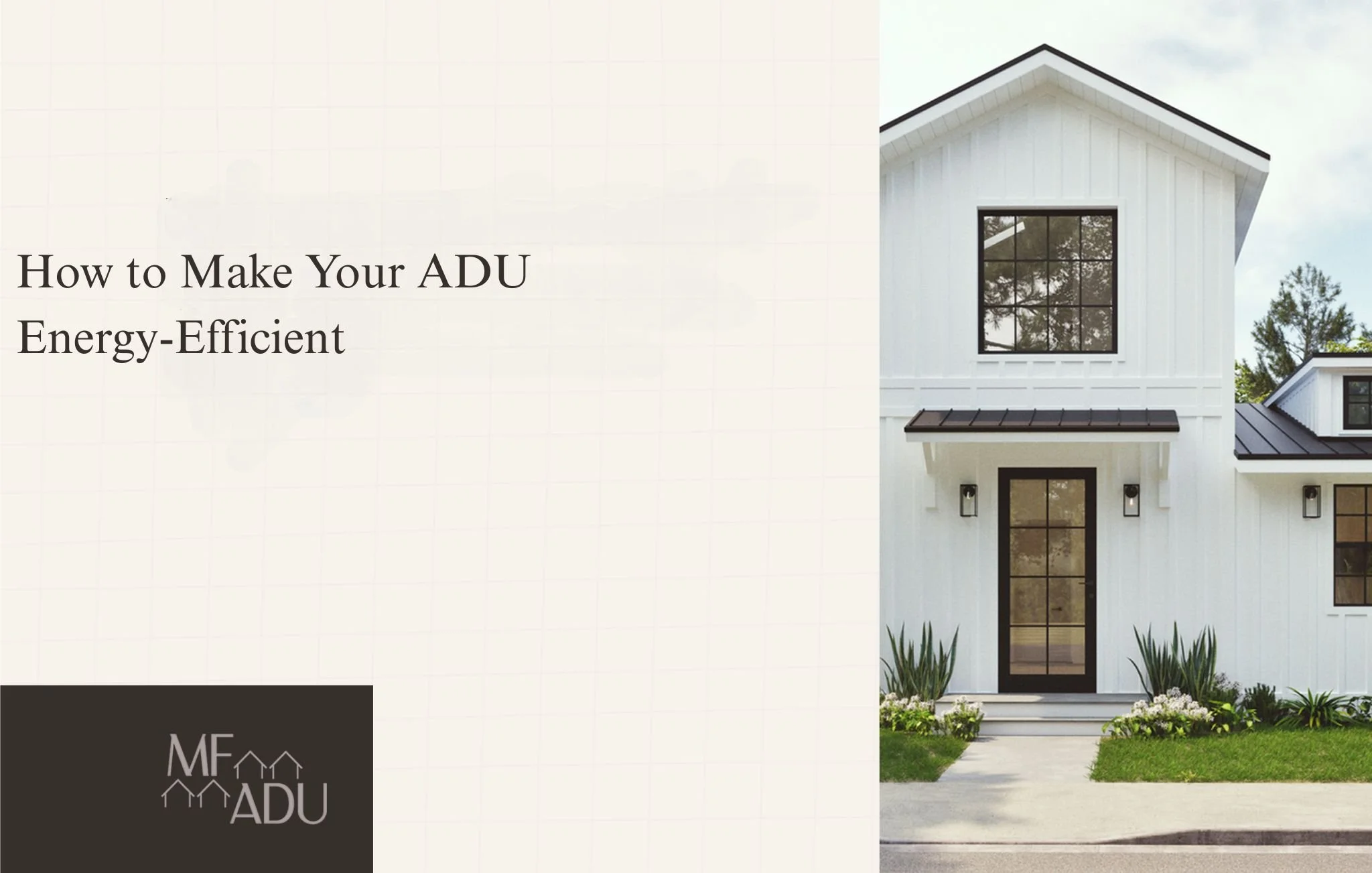
Energy efficiency is one of the most important considerations when building an accessory dwelling unit. A well-designed ADU can significantly reduce energy consumption while remaining comfortable and functional year-round. At MF ADU, we focus on smart design choices that help homeowners minimize energy use and maximize long-term performance.
Start With a Smart Layout
Energy efficiency begins with thoughtful space planning. Compact, well-organized layouts reduce the amount of space that needs to be heated or cooled and limit unnecessary energy loss.
Efficient layouts also allow systems like lighting and HVAC to perform better, especially in smaller living environments like ADUs.
Improve Insulation and Air Sealing
Proper insulation and airtight construction are essential for reducing energy loss. Insulation helps maintain indoor temperatures, while air sealing prevents drafts and unwanted heat transfer.
Key areas to focus on include walls, ceilings, floors, and window and door openings. These improvements reduce heating and cooling demands throughout the year.
Use Energy-Efficient Windows and Doors
High-performance windows and doors help control heat gain and loss while improving indoor comfort. Modern energy-efficient windows also allow natural light without excessive heat buildup.
Well-placed windows reduce the need for artificial lighting during the day and support passive heating and cooling strategies.
Choose Efficient Heating and Cooling Systems
Because ADUs are smaller spaces, right-sized systems perform better and consume less energy. High-efficiency heating and cooling options, such as heat pump systems, deliver consistent comfort without excessive energy use.
Efficient systems paired with good insulation result in lower utility bills and reduced environmental impact.
Maximize Natural Light and Ventilation
Using daylight and airflow effectively reduces reliance on artificial lighting and mechanical cooling. Design strategies that support energy efficiency include:
Strategic window placement
Cross-ventilation paths
Open interior layouts
These features improve comfort while reducing overall energy demand.
Plan for Renewable Energy Integration
Designing an ADU to be energy-ready allows for easier integration of renewable energy systems, such as solar panels. Even if installed later, planning ahead supports long-term efficiency and flexibility.
Renewable-ready design helps future-proof your ADU against rising energy costs.
Did you know?
Did you know energy-efficient design can reduce an ADU’s energy consumption by a significant margin over its lifetime, often leading to lower operating costs than traditional home additions?
Build an Energy-Efficient ADU with MF ADU
Energy efficiency works best when it’s part of the design from the beginning. At MF ADU, we help homeowners make informed decisions that improve efficiency, comfort, and long-term value.
To explore cost considerations and efficiency-focused planning, visit our pricing page.
Frequently Asked Questions
What makes an ADU energy-efficient?
Efficient layouts, insulation, windows, HVAC systems, and thoughtful design all contribute to lower energy use.
Are energy-efficient ADUs more expensive to build?
Some features may increase upfront costs, but they often lead to long-term savings on utilities.
Can prefab ADUs be energy-efficient?
Yes. Prefabricated construction often allows for tighter building envelopes and better quality control.
Does natural ventilation really reduce energy use?
Yes. Proper airflow can reduce the need for mechanical cooling in many conditions.
Does MF ADU help plan energy-efficient designs?
Yes. We guide homeowners through design and system choices that support energy efficiency from the start.